
Which garden edging to choose for flower beds, vegetable beds and lawns
We compare garden edging materials and models: height, top tube, coil length and colour. Find out which edging works best for flower beds, vegetable beds, lawns and paths, and how much you need.
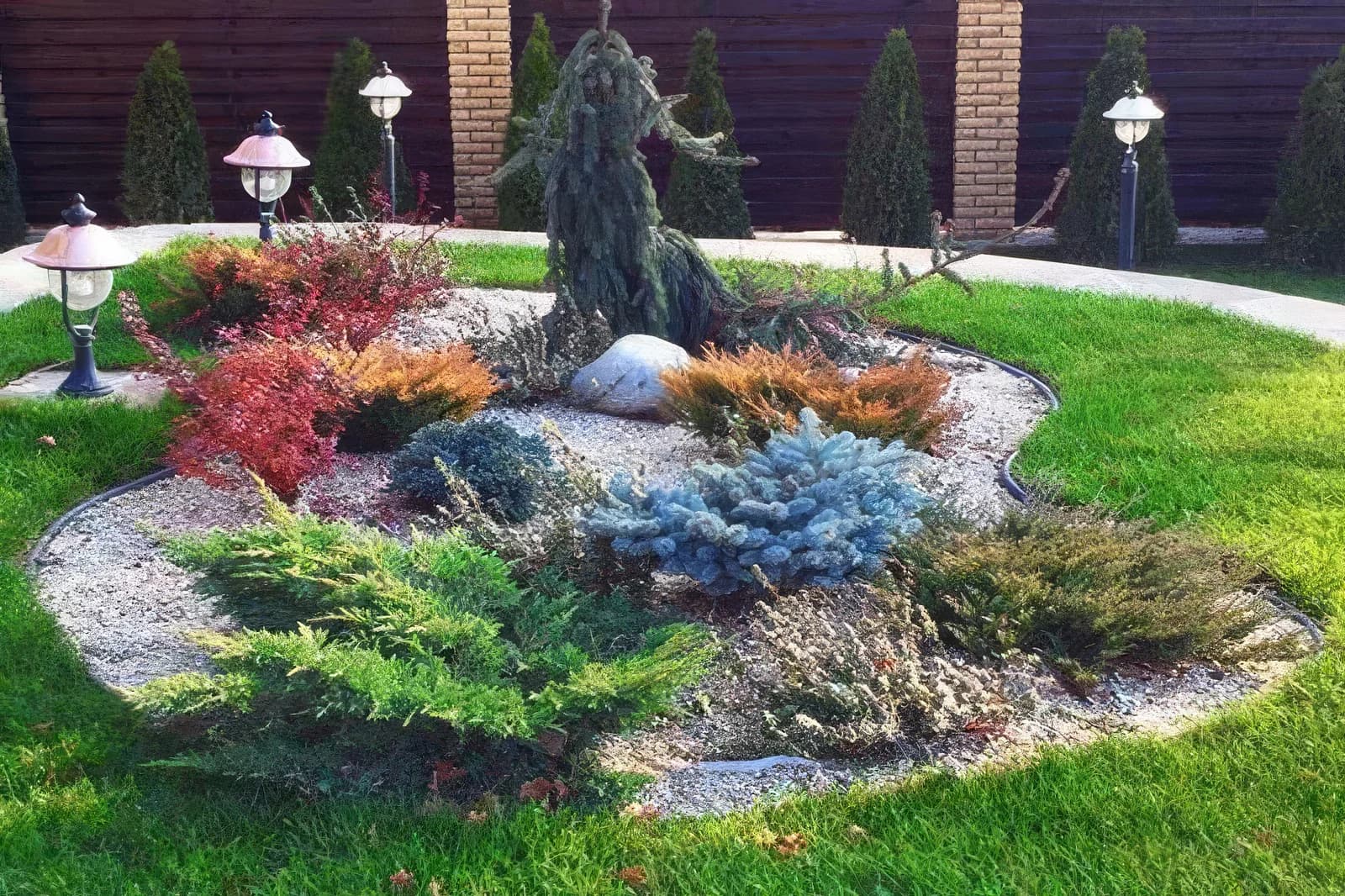
Garden edging does three jobs: it holds the shape of a flower bed or vegetable bed, stops the lawn and weeds from spreading, and keeps soil from spilling onto paths. Which edging is best depends on what exactly you are building. Let's go through the materials, the specifications and ready-made solutions for typical jobs.
What to make edging for flower beds, vegetable beds and lawns from
| Material | Pros | Cons |
|---|---|---|
| Concrete | Strong, withstands loads | Heavy, needs a base, hard to form curves |
| Natural stone, brick | Decorative | Costly to install, grass grows between the pieces |
| Timber | Natural look | Rots in the ground, needs treating |
| Metal | Thin, rigid edge | Price, sharp edges, rust in cheap versions |
| Plastic | Flexible, light, easy to install | Not for areas with vehicles, holds less than concrete |
For flower beds, vegetable beds and lawn edges, plastic edging is the most popular choice: you can bend it into any curve, install it without concrete and move it if you change the layout. Where cars drive, a concrete kerb is the better option.
Plastic edging: pros and cons
Pros:
- flexible: easy to form a circle, a wave or an intricate pattern;
- easy to install: all you need is a spade;
- light: you can carry a 10 m coil in one hand;
- does not rot or rust; Gartec edging is made of UV-resistant high-pressure polyethylene, so it does not fade in the sun.
Cons worth knowing about:
- not suitable for cars driving over it or for heavy loads;
- if it is buried too shallow or poorly compacted, the edge can "come out" after winter;
- very cheap strips without UV stabilisation fade and become brittle over time, so check what they are made of.
What to look for when choosing plastic edging
Height
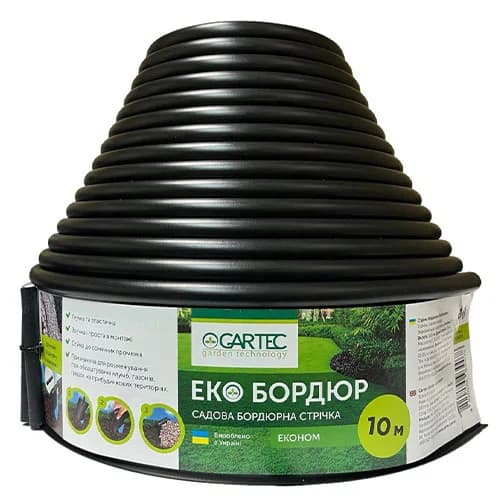
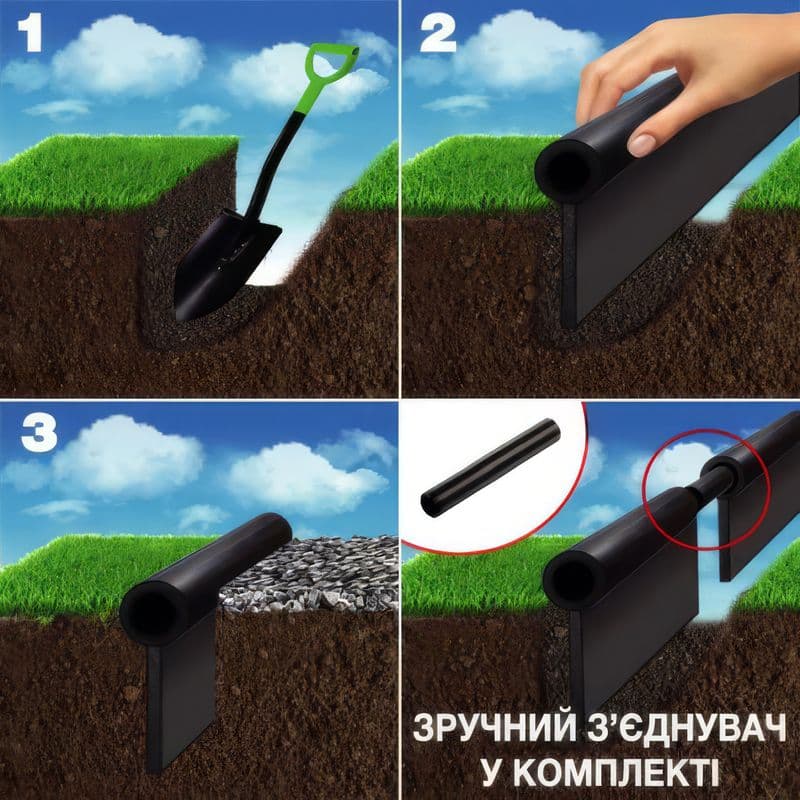
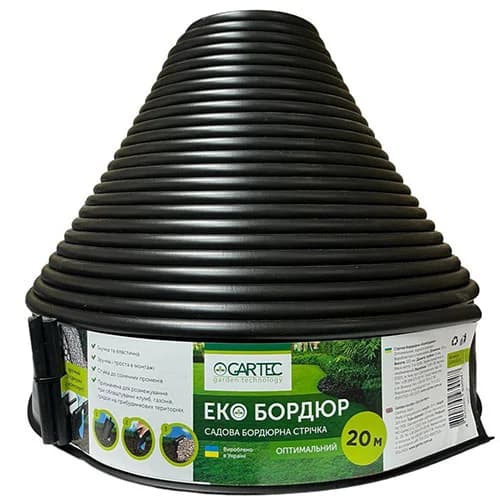
Height determines how much soil or loose material the edging will hold back. The Eco Border edging strip is 103–110 mm high: it is buried so that only the tube shows above the ground. The low Universal is 34 mm high and the MAX version 60 mm; they are set flush with the lawn or path.
Tube thickness
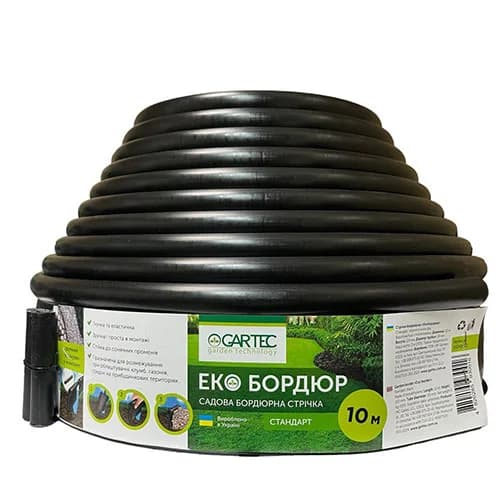
The tube along the top edge makes the strip stiffer and hides the cut edge. The Econom and Optimal series have a 12 mm tube, Standard a 20 mm one. A thicker tube means a stiffer edge that does not get crushed by a strimmer and holds the weight of the soil in vegetable beds.
Coil length
The longer the coil, the fewer the joints. A 20 m coil goes round a flower bed about 6 m in diameter in one piece. 10 m coils are handy for small flower beds and individual vegetable beds, and 6 m (MAX) for short paths.
Colour
- black is almost invisible, the all-purpose option;
- brown blends in with mulch, bark and soil;
- green disappears against the lawn.
The Eco Border strip comes in all three colours, Universal in black and brown.
Gartec models compared
| Model | Length | Height | Tube | Coil weight | Best for |
|---|---|---|---|---|---|
| Eco Border Econom | 10 m | 103 mm | 12 mm | 1.6 kg | Small flower beds |
| Eco Border Standard | 10 m | 110 mm | 20 mm | 2 kg | Vegetable beds, edge next to a lawn |
| Eco Border Optimal | 20 m | 103 mm | 12 mm | 3.2 kg | Large flower beds without joints |
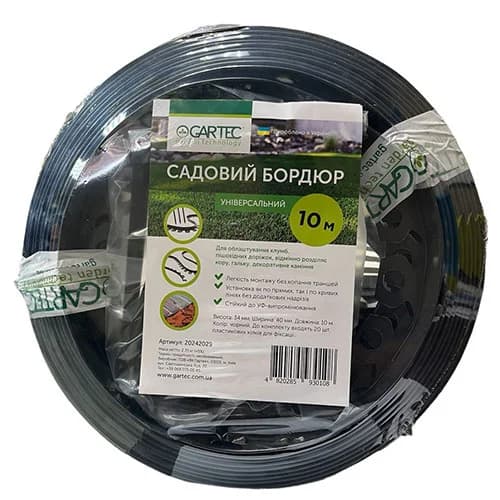
| Universal | 10 m + 20 stakes | 34 mm | — | — | Lawns, paving |
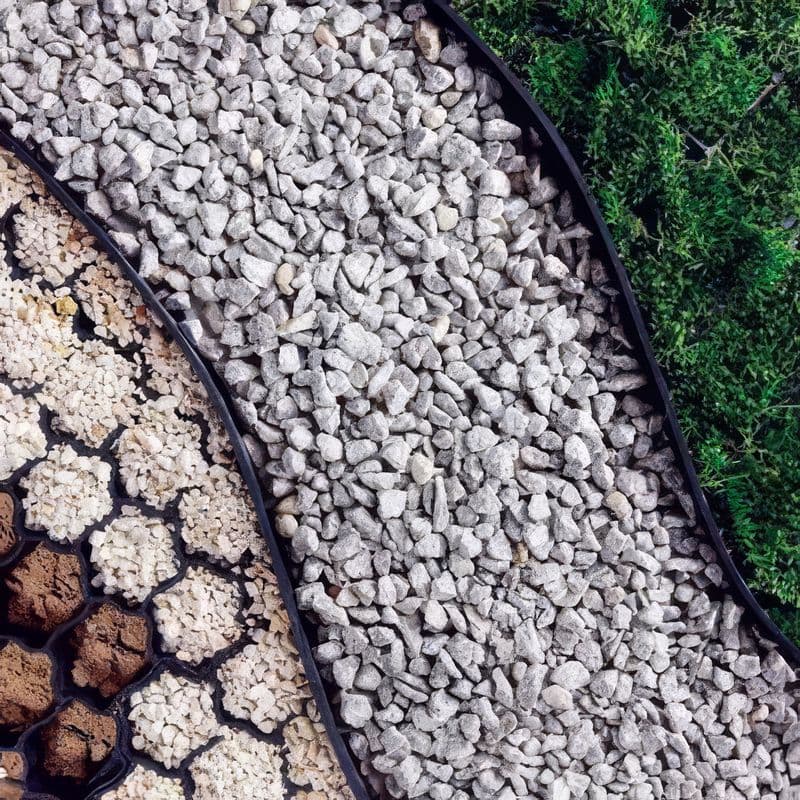
| Universal MAX | 6 m + 15 stakes | 60 mm | — | — | Gravel and bark paths |
The Universal profile is 40 mm wide.
Which edging to choose for a flower bed
For an ordinary flower bed, Eco Border Optimal 20 m is a good fit: 103 mm high, a long coil and no unnecessary joints. For small beds, Econom 10 m is enough, and it is the lightest. If the bed borders a lawn that is cut with a strimmer, go for Standard with its 20 mm tube. And if you want the bed level with the lawn so the mower can pass over the edge, choose the low Universal. More on the flower bed edging page.
Which edging to choose for vegetable beds
Eco Border Standard works best for vegetable beds: its 110 mm height and 20 mm tube give a stiff, straight edge that does not bend under the weight of the soil. On long rows, Optimal 20 m is handier as there are fewer joints. At the corners the strip simply bends, so separate corner pieces are not needed. The spaces between the beds can be covered with black mulching fabric, which keeps weeds out from between the beds. More details: vegetable bed edging.
Which edging to choose for lawns and paths
Here you need an edge flush with the ground so the lawn mower can pass over it. Universal 10 m with stakes separates grass from mulch, gravel or paving, and the stakes stop the edge from shifting when paving is laid or gravel is spread next to it. For paths made of loose materials, MAX 60 mm works better, as its higher side holds bark and pebbles more securely. Plastic is not suitable for a driveway; that needs a concrete kerb.
Edging for paths and paving
For garden paths, what matters is what the path is made of. Paving laid on a sand base is held by the low Universal: it is set tight against the outer row, and the stakes stop the base from spreading. Gravel, bark and pebbles are better held by the taller Universal MAX 60 mm. The edging strip with a tube also works for paths if the path sits slightly lower than the flower bed and you need to stop soil spilling onto it.
Mistakes when choosing
- Buying the "tallest" edging for everything. For a lawn you mow over, a tall edge only gets in the way; you need a low profile flush with the ground.
- Choosing the lightest strip for vegetable beds. A thin edge can bend under the weight of the soil; raised beds need a stiffer tube.
- Ignoring joints. Several short coils on a large flower bed mean several visible joints. A long coil solves the problem.
- Forgetting about colour. A bright or contrasting edge draws the eye; if the edging should be unobtrusive, choose black or the colour of your mulch.
How much edging to buy
- Measure the perimeter: for a circle it is 3.14 × diameter, for a rectangle 2 × (length + width).
- Add up the perimeters of all your flower beds or vegetable beds.
- Add about 5% for joints and trimming.
- Divide by the coil length and round up.
For example, six 3 × 1 m vegetable beds: one has a perimeter of 8 m, all six 48 m, or about 50.4 m with the allowance. That is six 10 m coils of Standard, one per bed, or three 20 m coils of Optimal.
If you are torn between two 10 m coils and one 20 m coil, count the joints: on a single large flower bed a long coil always looks neater, while short coils are handier for several separate vegetable beds.
Prices and ordering
Prices are listed in the garden edging catalogue. You can buy from a single coil, and from 10 coils the price drops automatically in the cart. For how to install the edging you have chosen, see our step-by-step installation guide.
Products in this article
Colour: black, brown
Universal garden edging 10 m + 20 stakes
631 ₴
per coil
from 555 ₴ for 50+ pcs
FAQ
Which garden edging is best?
It depends on the job: for flower beds, Eco Border Optimal or Econom; for vegetable beds, Standard with its 20 mm tube; for lawns and paths, the low Universal with stakes.
How tall should vegetable bed edging be?
Standard is 110 mm, Econom and Optimal are 103 mm. For raised beds, use Standard: it has the stiffest edge.
Does plastic edging fade in the sun?
Gartec edging is made of UV-resistant high-pressure polyethylene, so it does not fade.
What colour edging should I choose?
Black is almost invisible, brown blends in with mulch and green with the lawn. Universal comes in black and brown.
Can I buy just one coil?
Yes, you can buy from a single coil. From 10 coils the price drops automatically in the cart.
Useful articles
All articles →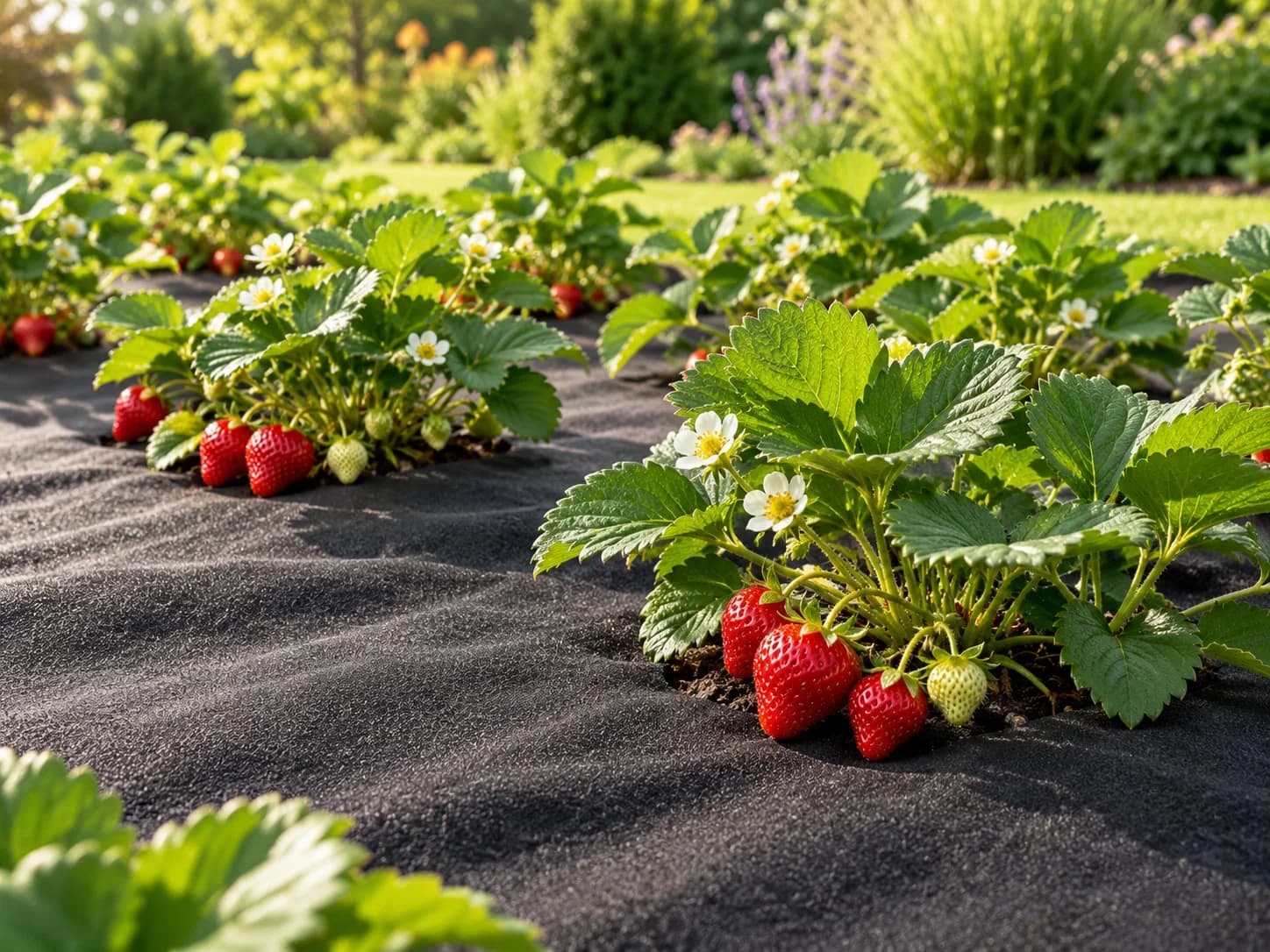
Black mulching fabric: what it is for and how to mulch vegetable beds
What black mulching fabric is used for, whether it lets water through and whether it protects against frost. How to prepare a bed, lay the fabric, pin it down with stakes and plant through it.
Read →
Dimpled membrane for foundations and perimeter paving: what it is for and how to install it
What dimpled membrane is used for, which way up to lay it on a foundation and under perimeter paving, and how to fix it without damaging the waterproofing. Step-by-step installation and common mistakes.
Read →
How to lay anti-mole mesh under a lawn: depth, installation and tips
How anti-mole mesh works, how deep to lay it and how to leave moles no way in at the joints and around the edges. A step-by-step guide for turf and seeded lawns.
Read →